springboot集成neo4j
1创建一个springboot项目引入neo4j的依赖
<!-- neo4j依赖 -->
        <dependency>
            <groupId>org.springframework.boot</groupId>
            <artifactId>spring-boot-starter-data-neo4j</artifactId>
        </dependency>
2、配置文件设置连接neo4j的地址
# neo4j配置
spring.data.neo4j.uri= bolt://192.168.0.100:7687
spring.data.neo4j.username=neo4j
spring.data.neo4j.password=testpasswd
3、创建person的实体类和接口PersonRepository
package com.example.demo.entity;

import org.neo4j.ogm.annotation.GeneratedValue;
import org.neo4j.ogm.annotation.Id;
import org.neo4j.ogm.annotation.NodeEntity;
import org.neo4j.ogm.annotation.Property;

import java.io.Serializable;

//节点的标签类型
@NodeEntity(label = "person")
public class Person implements Serializable {

    //neo4j自动生成的id
    @Id
    @GeneratedValue
    private Long id;

    //节点的属性
    @Property
    private String name;

    public Long getId() {
        return id;
    }

    public void setId(Long id) {
        this.id = id;
    }

    public String getName() {
        return name;
    }

    public void setName(String name) {
        this.name = name;
    }
}
package com.example.demo.dao;

import com.example.demo.entity.Person;
import org.springframework.data.neo4j.annotation.Query;
import org.springframework.data.neo4j.repository.Neo4jRepository;
import org.springframework.stereotype.Repository;

import java.util.List;

@Repository
public interface PersonRepository  extends Neo4jRepository<Person,Long> {

    @Query("Match (p:person) return p")
    List<Person> findParentList();
}
4、创建RelatlionShip的关系类和接PersonRelatlionShipRepository
package com.example.demo.entity;

import org.neo4j.ogm.annotation.*;

import java.io.Serializable;

//关系实体  必须有起始节点和结束节点
@RelationshipEntity(type="personRelationShip")
public class RelatlionShip  implements Serializable {
    @Id
    @GeneratedValue
    private Long id;

    //起始节点
    @StartNode
    private Person startPerson;

    //结束节点
    @EndNode
    private Person endPerson;

    //属性
    @Property
    private String relation;

    public Long getId() {
        return id;
    }

    public void setId(Long id) {
        this.id = id;
    }

    public Person getStartPerson() {
        return startPerson;
    }

    public void setStartPerson(Person startPerson) {
        this.startPerson = startPerson;
    }

    public Person getEndPerson() {
        return endPerson;
    }

    public void setEndPerson(Person endPerson) {
        this.endPerson = endPerson;
    }

    public String getRelation() {
        return relation;
    }

    public void setRelation(String relation) {
        this.relation = relation;
    }
}
package com.example.demo.dao;


import com.example.demo.entity.RelatlionShip;

import org.springframework.data.neo4j.annotation.Query;
import org.springframework.data.neo4j.repository.Neo4jRepository;
import org.springframework.stereotype.Repository;

@Repository
public interface PersonRelatlionShipRepository extends Neo4jRepository<RelatlionShip,Long> {

    @Query("match (n:person {name:{0}}), (m:person {name:{2}})  create (n)-[:关系{relation:{1}}]->(m)")
    void createRelation(String from,String relation,String to);
}
5、创建测试类DemoApplicationTests
package com.example.demo;

import com.example.demo.dao.PersonRelatlionShipRepository;
import com.example.demo.dao.PersonRepository;
import com.example.demo.entity.Person;
import com.example.demo.entity.RelatlionShip;
import org.junit.jupiter.api.Test;
import org.springframework.beans.factory.annotation.Autowired;
import org.springframework.boot.test.context.SpringBootTest;
import sun.print.PeekGraphics;

import java.util.List;
import java.util.Optional;

@SpringBootTest
class DemoApplicationTests {

    @Autowired
    PersonRepository personRepository;

    @Autowired
    PersonRelatlionShipRepository personRelatlionShipRepository;

    @Test
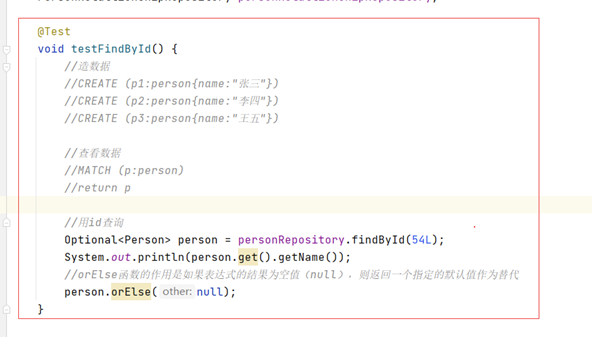
    void testFindById() {

        //用id查询
        Optional<Person> person = personRepository.findById(54L);
        System.out.println(person.get().getName());
        //orElse函数的作用是如果表达式的结果为空值(null),则返回一个指定的默认值作为替代
        person.orElse(null);
    }

    @Test
    void testFindPersonList() {
        List<Person> list = personRepository.findParentList();
        for(Person person:list){
            System.out.println(person.getName());
        }
    }

    @Test
    void testDeleteById() {
        //用id删除
        personRepository.deleteById(2L);
    }

    @Test
    void testCreateEntity() {
        //增加节点
        Person newPerson = new Person();
        newPerson.setName("大侠");
        personRepository.save(newPerson);
    }

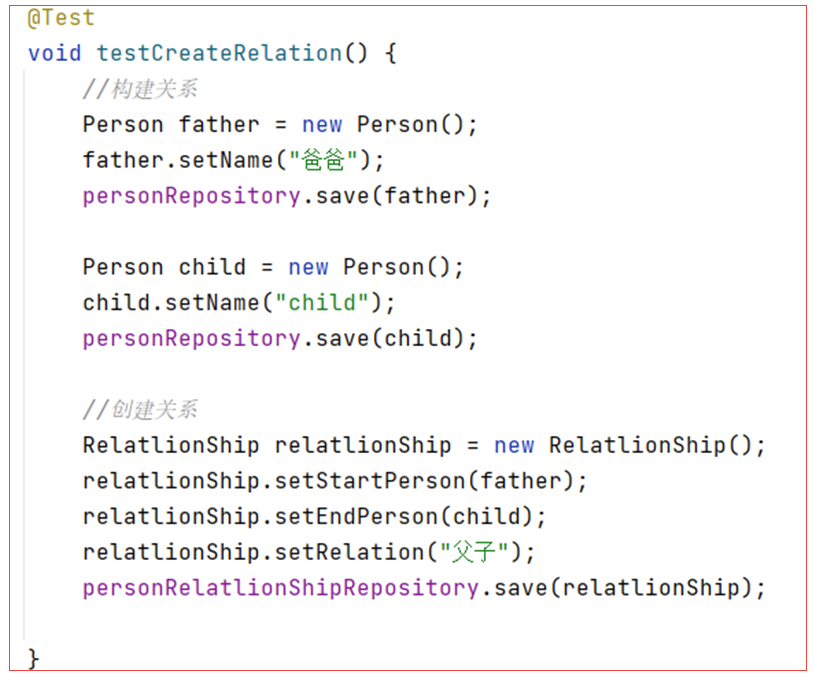
    @Test
    void testCreateRelation() {
        //构建关系
        Person father = new Person();
        father.setName("爸爸");
        personRepository.save(father);

        Person child = new Person();
        child.setName("child");
        personRepository.save(child);

        //创建关系
        RelatlionShip relatlionShip = new RelatlionShip();
        relatlionShip.setStartPerson(father);
        relatlionShip.setEndPerson(child);
        relatlionShip.setRelation("父子");
        personRelatlionShipRepository.save(relatlionShip);

    }

    @Test
    void testCreateRelationCql() {
        personRelatlionShipRepository.createRelation("大侠","斩杀","李四");
    }

    @Test
    void testDeleteRelationById() {
        //用id删除关系
        personRelatlionShipRepository.deleteById(18L);
    }

}
6、运行测试方法
<1>清空数据
MATCH (n)
DETACH DELETE n
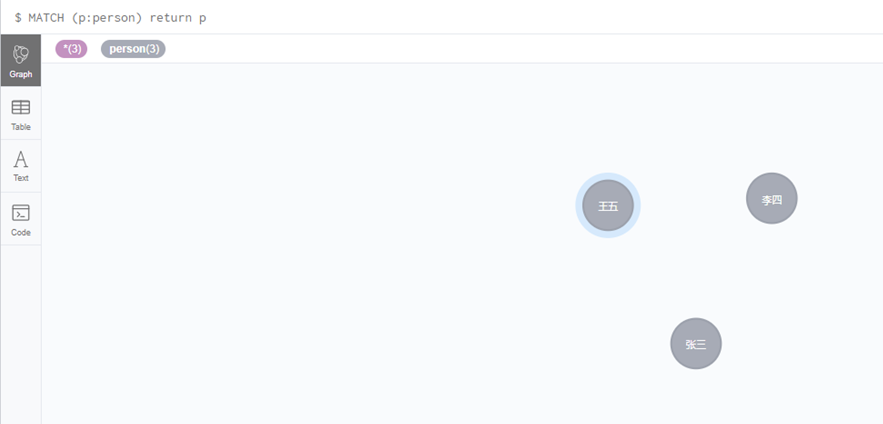
<2>造数据演示数据
CREATE (p1:person{name:"张三"})
CREATE (p2:person{name:"李四"})
CREATE (p3:person{name:"王五"})
查看数据
MATCH (p:person)
return p
<3>演示根据id查找person的方法
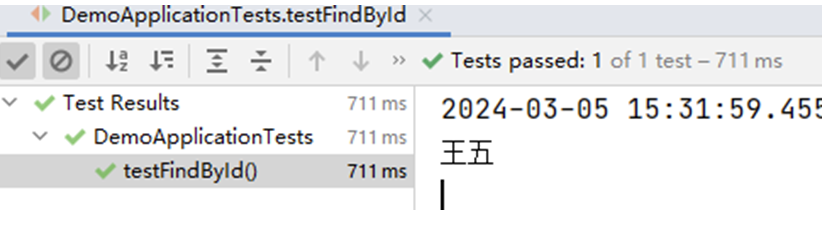
运行结果:
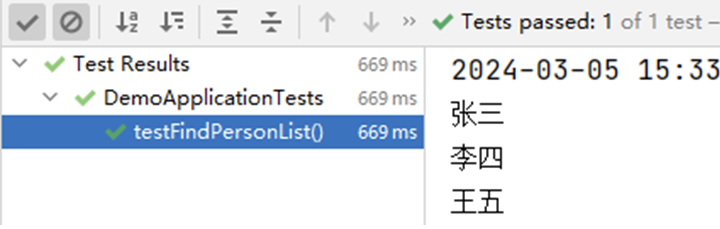
<4>运行自己写的方法,返回所有person对象
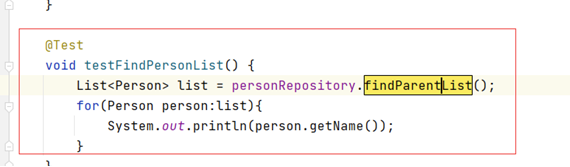
运行结果
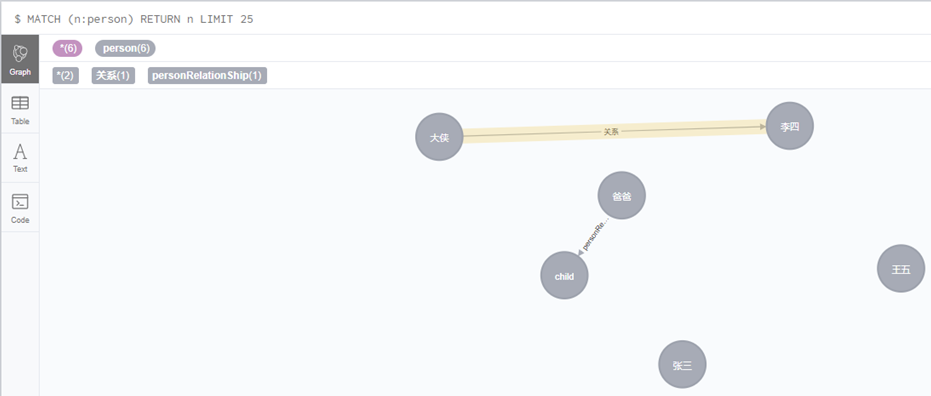
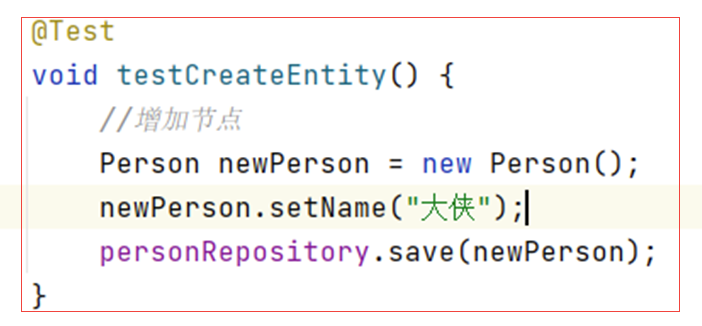
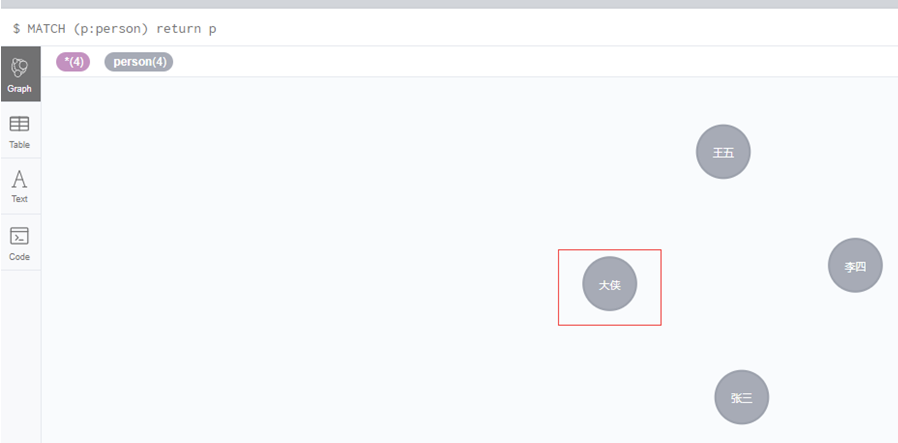
<5>创建一个person 大侠
运行后在neo4j里查询
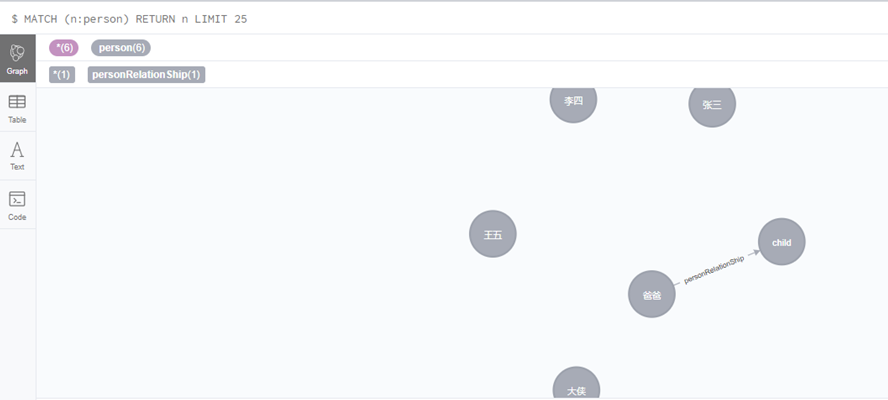
<5>调用方法创建对象之间的联系
运行后查看结果:
<5>调用自己写的语句方法,创建关系

运行结果: