JDBC 工具类
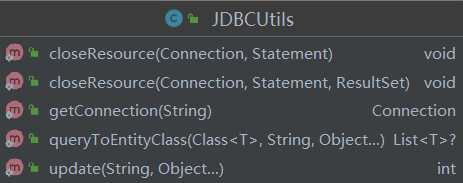
工具类JDBCUtils包括以下方法
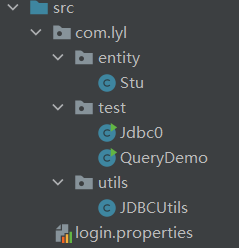
项目结构如下
代码如下
package com.lyl.utils;

import java.io.IOException;
import java.io.InputStream;
import java.lang.reflect.Field;
import java.sql.*;
import java.util.ArrayList;
import java.util.List;
import java.util.Properties;


// 可以将CRUD操作设计为静态方法
// 也可以写成DAO类,让实体类继承CRUD的方法
public class JDBCUtils {
    /**
     * 获取数据库的一个连接
     * 方法中使用JDBCUtils.class.getClassLoader().getResourceAsStream(path),该path是指类路径classPath,
     * 即在普通项目中指"src/",在web项目中指"/WEB-INF/classes/"
     *
     * @param propertiesPath 返回配置文件的路径propertiesPath,该文件存放连接数据库需要的user、password、url、driverClass等相关参数
     * @return 到数据库的连接
     * @throws IOException
     * @throws ClassNotFoundException
     * @throws SQLException
     */
    public static Connection getConnection(String propertiesPath) throws Exception{
        InputStream resourceAsStream = JDBCUtils.class.getClassLoader().getResourceAsStream(propertiesPath);
        Properties properties = new Properties();
        properties.load(resourceAsStream);

        String user = properties.getProperty("user");
        String password = properties.getProperty("password");
        String url = properties.getProperty("url");
        String driverClass = properties.getProperty("driverClass");


        Class.forName(driverClass);
        Connection connection = DriverManager.getConnection(url, user, password);
        return connection;

    }

    /**
     * 对于增删改操作,关闭到数据库的connection和statement
     * @param conn 到数据库的连接 conn
     * @param ps sql对应的statement ps
     */
    public static void closeResource(Connection conn, Statement ps) {
        try {
            // 避免空指针(对象没有创建的时候就关闭)
            if (conn != null)
                conn.close();
        } catch (SQLException throwables) {
            throwables.printStackTrace();
        }
        try {
            // 避免空指针(对象没有创建的时候就关闭)
            if (ps != null)
                ps.close();
        } catch (SQLException throwables) {
            throwables.printStackTrace();
        }
    }

    /**
     * 对于查找操作,关闭到数据库的connection、statement和resultSet
     * @param conn 到数据库的连接 conn
     * @param ps sql对应的statement ps
     * @param rs 查询出的结果集 rs
     */
    public static void closeResource(Connection conn, Statement ps, ResultSet rs) {
        try {
            // 避免空指针(对象没有创建的时候就关闭)
            if (conn != null)
                conn.close();
        } catch (SQLException throwables) {
            throwables.printStackTrace();
        }
        try {
            // 避免空指针(对象没有创建的时候就关闭)
            if (ps != null)
                ps.close();
        } catch (SQLException throwables) {
            throwables.printStackTrace();
        }
        try {
            // 避免空指针(对象没有创建的时候就关闭)
            if (rs != null) {
                rs.close();

            }
        } catch (SQLException throwables) {
            throwables.printStackTrace();
        }
    }


    /**
     * 输入带占位符的sql和填补占位符的参数,执行增删改操作
     * @param sql 带占位符的sql
     * @param args 填补占位符的参数 args
     * @return 成功操作的行数,出错则返回-1
     * @throws SQLException
     * @throws IOException
     * @throws ClassNotFoundException
     */
    public static int update(String sql, Object... args) {
        Connection connection = null;
        PreparedStatement preparedStatement = null;
        int ans = -1;
        try {
            connection = JDBCUtils.getConnection("login.properties");
            preparedStatement = connection.prepareStatement(sql);
            for (int i = 0; i < args.length; i++) {
                preparedStatement.setObject(i + 1, args[i]);
            }
            ans = preparedStatement.executeUpdate();
            return ans;
        }  catch (Exception e) {
            e.printStackTrace();
        }finally {
            JDBCUtils.closeResource(connection, preparedStatement);

        }
        return -1;

    }

    /**
     * 输入实体类的Class对象,带占位符的sql,填补占位符的参数,执行查询操作,返回实体类的List集合
     * @param tClass 实体类的Class对象 tClass
     * @param sql 带占位符的sql
     * @param args 填补占位符的参数 args
     * @param <T> 指实体类的类型 <T>
     * @return 执行查询操作,返回实体类的List集合,出错则返回null
     */
    public static <T> List<T> queryToEntityClass(Class<T> tClass, String sql, Object... args) {
        Connection connection = null;
        PreparedStatement preparedStatement = null;

        ResultSet resultSet = null;
        List<T> ansList = null;
        try {
            connection = JDBCUtils.getConnection("login.properties");
            preparedStatement = connection.prepareStatement(sql);
            for (int i = 0; i < args.length; i++) {
                if (args[i] instanceof Integer) {
                    preparedStatement.setInt(i + 1, (Integer) args[i]);
                } else if (args[i] instanceof String) {
                    preparedStatement.setString(i + 1,  (String) args[i]);
                } else {
                    preparedStatement.setObject(i + 1, args[i]);
                }

            }

            resultSet = preparedStatement.executeQuery();
            ResultSetMetaData metaData = resultSet.getMetaData();
            int columnCount = metaData.getColumnCount();
            ansList = new ArrayList<>();
            while (resultSet.next()) {
                // 创建一个实体类对象

                T entityClass = tClass.newInstance();
                for (int i = 0; i < columnCount; i++) {
                    // 从ResultSet中获取属性值
                    Object fieldValue = resultSet.getObject(i + 1);
                    // 通过元数据MetaData获得属性名,通过反射获得实体类的属性
                    String columnName = metaData.getColumnName(i + 1);
                    Field field = entityClass.getClass().getDeclaredField(columnName);
                    field.setAccessible(true);
                    field.set(entityClass, fieldValue);
                }
                ansList.add(entityClass);

            }
            return ansList;
        } catch (Exception e) {
            e.printStackTrace();
        } finally {
            JDBCUtils.closeResource(connection, preparedStatement, resultSet);
        }

        return null;
    }

}