数据结构-------单链表
单链表:
在计算机科学中,链表是数据元素的线性组合,元素储存上并不连续。
可以分为:单向链表、双向链表、循环链表

单向链表:
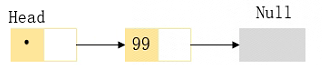
首先,定义结点的类型,它包括值和下一个结点。
头部插入法:
相关java代码:
 1 private  Node head;//定义头部结点
 2     public class Node{
 3         private int value;//每个结点的值
 4         private Node next;//指向下一个结点
 5         public Node(int value,Node next) {
 6             this.value=value;
 7             this.next=next;
 8         }
 9     }
10     //实现添加元素的方法
11     public void addFirwst(int value) {
12 //        head = new Node(value,null) ;//假设链表为空,也就是head为空   这一行代码和下一行代码功能一样    head为空那么new Node(value,head)
13         head = new Node(value,head);//假设链表不为空
14     }
15     //while循环遍历元素loop
16     public  void loop1() {
17         Node p = head;
18         while(p!=null) {
19             System.out.print(p.value+"\t");
20             p=p.next;
21         }
22     }
相关测试代码:
1 SingleLinkList singlelinklist = new SingleLinkList();
2         singlelinklist.addFirwst(6);
3         singlelinklist.addFirwst(2);
4         singlelinklist.addFirwst(8);
5         singlelinklist.addFirwst(12);
6         singlelinklist.addFirwst(0);
7         System.out.println("遍历元素loop1:");
8         singlelinklist.loop1();
结果显示:

各种遍历方法:
除了上述代码中的while循环还有for循环和迭代器和Consumer等方法
//for循环遍历元素
    public void loop2() {
        for(Node p=head;p!=null;p=p.next) {
            System.out.print(p.value+"\t");
        }
    }
    //通过Consumer来遍历元素
    public void loop3(Consumer<Integer> consumer) {
        for(Node p=head;p!=null;p=p.next) {
            consumer.accept(p.value);
        }
    }
    //通过迭代器来遍历元素
    @Override
    public Iterator<Integer> iterator() {
        // TODO Auto-generated method stub
        return new Iterator<Integer>() {
            Node p =head;
            @Override
            public boolean hasNext() {
                // TODO Auto-generated method stub
                return p!=null;
            }

            @Override
            public Integer next() {
                // TODO Auto-generated method stub
                int value = p.value;
                p=p.next;
                return value;
            }
        };
    }
尾部插入法:
 1 //尾插法   尾部插入   主要找到尾部最后一个元素
 2     private Node findLast() {
 3         if(head==null) {
 4             return null;
 5         }
 6         Node p;
 7         for(p=head;p.next!=null;p=p.next) {
 8
 9         }
10         return p;
11     }
12     public void addLast(int value) {
13         Node last = findLast();//找到最后一个元素
14         if(last==null) {
15             addFirwst(value);
16             return;
17         }
18         last.next = new Node(value,null);
19     }
效果

根据索引值求返回值:
 1 //根据索引求返回值
 2     private Node findNode(int index) {
 3         int i=0;
 4         Node p;
 5         for(p=head;p!=null;p=p.next,i++) {
 6             if(i==index) {
 7                 return p;
 8             }
 9         }
10         return null;
11     }
12     public int get(int index) {
13         Node p = findNode(index);
14         if(p==null) {
15             throw new IllegalArgumentException(String.format("index [%d] 不合法", index));
16         }
17         return p.value;
18     }
根据索引值添加元素:
 1 //给出索引添加元素
 2     public void insert(int index,int value) {
 3         if(index==0) {
 4             addFirwst(value);
 5             return;
 6         }
 7         Node prev = findNode(index-1);//找到当前元素的前一个元素
 8         if(prev==null) {
 9             throw new IllegalArgumentException(String.format("index [%d] 不合法", index));
10         }
11         prev.next = new Node(value,prev.next);
12
13     }
删除第一个元素:
1 //删除第一个元素
2     public void removeFirst() {
3         if(head==null) {
4             throw new IllegalArgumentException(String.format("index [%d] 不合法"));
5         }
6         head = head.next;
7     }
根据索引删除元素:
 1 //根据索引删除元素
 2     public void remove(int index) {
 3         //根据index-1前面一个元素
 4         if(index==0) {
 5             removeFirst();
 6         }
 7         Node prev = findNode(index-1);
 8         if(prev==null) {
 9             throw new IllegalArgumentException(String.format("index [%d] 不合法"));
10         }
11         Node removed = prev.next;
12         if(removed==null) {
13             throw new IllegalArgumentException(String.format("index [%d] 不合法"));
14         }
15         prev.next = removed.next;
16
17     }