SciTech-Mathematics-Probability+Statistics-[THREE types of Probability]{Subjective, Theoretical, Empirical}
- THREE types of Probability:
- Theoretical Probability
- Empirical Probability
- Subjective Probability
Definition: Empirical and theoretical prior distribution
Index: The Book of Statistical Proofs ▷ General Theorems ▷ Bayesian statistics ▷ Prior distributions ▷ Empirical vs. non-empirical
Definition: Let p(θ|m) be a prior distribution for the parameter θ of a generative model
m. Then:
the distribution is called an “empirical prior”, if it has been derived from empirical data;
the distribution is called a “theoretical prior”, if it was specified without regard to empirical data.
-
Bayes, Empirical Bayes and Moderated Methods
-
Empirical and theoretical prior distribution | The Book of …
-
https://www.khanacademy.org/math/cc-seventh-grade-math/cc-7th-probability-statistics/cc-7th-theoretical-and-experimental-probability/v/comparing-theoretical-to-experimental-probabilites
-
Difference between theoretical equations and empirical equations:
- Theoretical equations are in the sense that they are derived from an underlying theory.
- Empirical equations are in the sense that they were selected only because they fit experimental data and without a theoretical justification.
If we look at an equation can we identify whether it is a theoretical equation or an empirical equation just by looking at the equation?
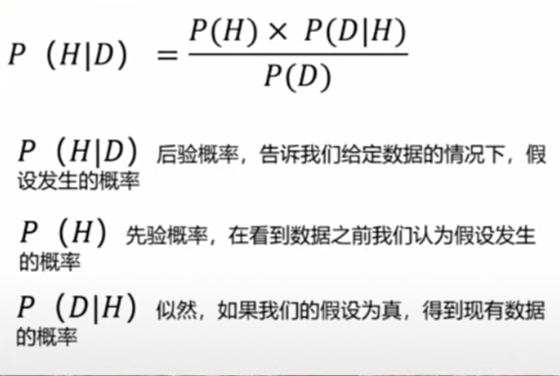
主观经验 和 客观事实:后验概率
Subjective主观经验: 先验概率 & 似然概率
Objective客观事实: 后验概率 & 条件概率
Outcome vs. Event: What's the Difference?
BY ZACH BOBBITTPOSTED ON MAY 5, 2021
Two terms that students often confuse in statistics are outcome and event.
Here's the subtle difference between the two terms:
- Outcome: The result of a random experiment.
For example, there are six potential outcomes when rolling a die: 1, 2, 3, 4, 5, or 6. - Event: A set of outcomes that has a probability assigned to it.
For example, one possible "event" could be rolling an even number. The probability that this event occurs is 1/2.
The following examples show more scenarios that illustrate the difference between outcomes and events.
Example 1: Deck of Cards
Suppose we randomly draw a card from a standard deck of 52 cards.
The four possible outcomes for the suit of the card include:
- Heart
- Spade
- Diamond
- Club
One of these four "outcomes" must occur.
However, there are many "different" events that we may be interested in assigning a probability to.
For example:
- Event 1: Draw a Heart: The probability that this event occurs is 13/52 or 1/4.
- Event 2: Draw a Heart or a Spade: The probability that this event occurs is 26/52 or 1/2.
- Event 3: Draw a card that is not a Heart: The probability that this event occurs is 39/52 or 3/4.
There are many more events that we could come up with and assign a probability to, but these are just three simple ones.
Example 2: Pulling Marbles from a Bag
Suppose a bag has 3 red marbles, 5 green marbles, and 2 blue marbles.
If we close our eyes and randomly select one marble from the bag, the three possible outcomes for the color of the marble include:
Red
Green
Blue
One of these four outcom